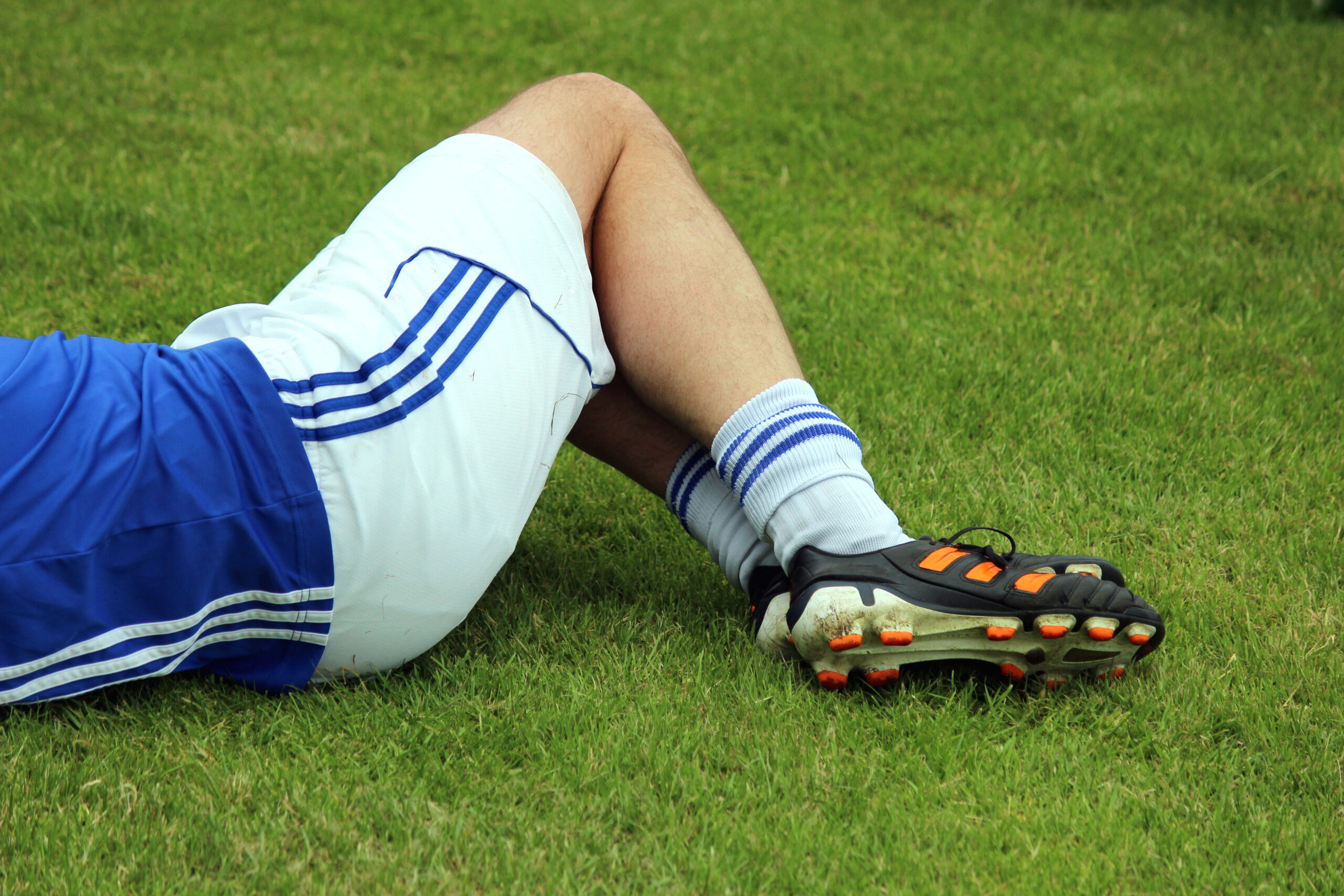
Kinesiology THURSDAY – Why Hamstrings Tear (Part 3)

Let’s continue our exploration of common factors contributing to hamstring strain injuries (HSI) in soccer players. In the article entitled Prevalence of Hamstring Strain Injury Risk Factors in Professional and Under 20-Male Football (Soccer) Players, 28.7% of players with repeated HSI displayed poor core stability. What does that have to do with the hamstrings?
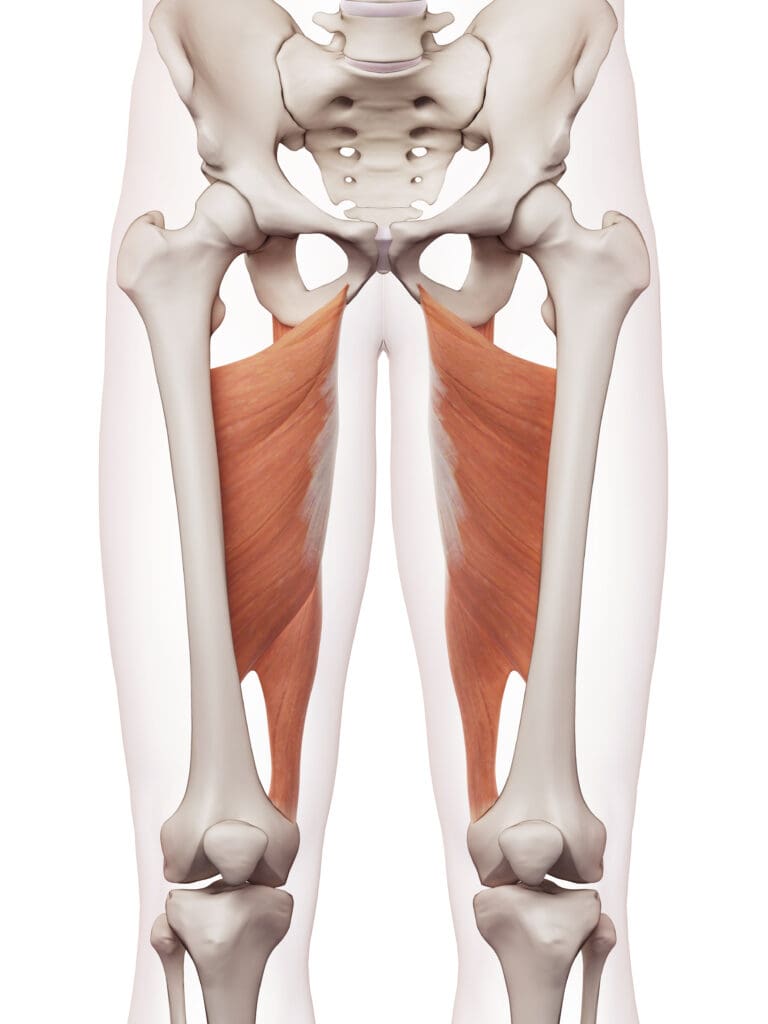
The most commonly torn hamstring muscle is the bicep femoris long head (BFlh), attaching from the ischial tuberosity to the fibular head.
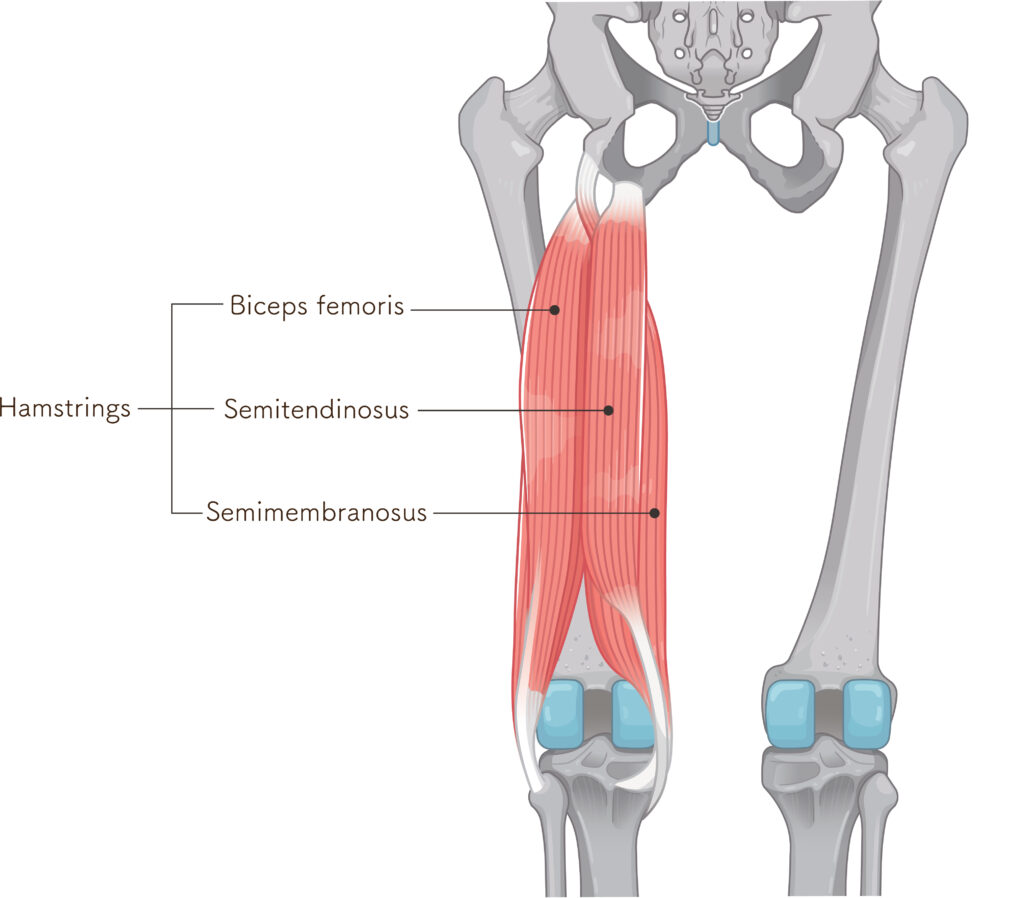
Due to its attachment and the pelvis, it is evident that the BFlh would be placed in a chronically lengthened and weakened position in one or more of the following scenarios regarding the pelvis:
- Anterior pelvic tilt (sagittal plane) often occurs due to tightness of the hip flexors (an antagonist of the BFlh) which results in compensatory weakness of the abdominal muscles. The Test: Holding a plank position for 60 seconds without back pain. The FIX: Activate abdominal muscles in a posterior pelvic tilt or with the pelvis in neutral. Try posterior pelvic tilts, planks, reverse crunches or any version of a squat where pelvic position is monitored and maintained in neutral.
- Lateral pelvic tilt to the opposite side (frontal plane) occurs if the gluteus medius is weak on the involved limb. The Test: Holding a side plank position while performing hip abduction with the top leg for 10 repetitions. The FIX: Activate the gluteus medius in the shortened position. Mini-band lateral stepping, single leg stance balance activities and side plank variations will help stabilize the pelvis in the frontal plane.
- Pelvic rotation towards the same side (transverse plane) occurs if the gluteus maximus is weak, if the ankle lacks eversion or if the opposite leg over pronates. The Test: Stand with feet hip width apart and isometrically tighten just one glute. The weaker side is the the one the pelvis is rotated towards. The FIX: Standing tubing punch to level the pelvis in the transverse plane, long stride walking making sure to square the pelvis up to the front with each step and exercises to mobilize the subtalar joint into eversion such as walking on a line or carioca walking.
Why does this matter?
Hamstring strain injuries may be caused due to core instability contributing to an over lengthened position of the bicep femoris long head. Triplanar assessment and intervention of pelvic stabilization may reduce the incidence of hamstring strains in athletes. Core stabilization may also be used early on in rehabilitation of HSI as many positions do not require a lengthened position of the hamstrings.
So, check out the core and fix some hamstrings.
Because nobody has time to be in pain.
Until next time…

Kind Regards,
MoveWell Academy
[email protected]