Muscle Minute TUESDAY – Meet the Diaphragm
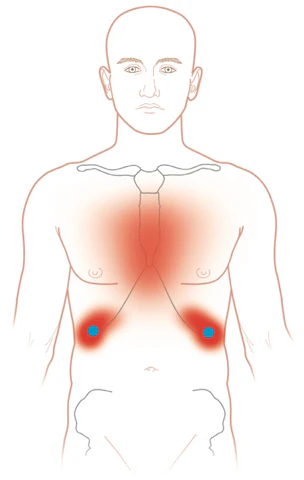
I had a patient yesterday inquire about a technique to assist in acid reflux. “My friend who is a retired chiropractor was telling me about it,” she said. I was unfamiliar with that particular technique, but instead decided to evaluate her diaphragm for trigger points. She presented with a severe trigger point on the right and left points just under the ribcage.
Here are the most common trigger points of the diaphragm and the referral pain pattern.
A deeper dive into this muscle reveals it has a greater effect on things other than just breathing. Let’s get started.
| Origin | xiphoid process, inner surface of ribs 7-12, L1-3 vertebra |
| Insertion | central tendon of diaphragm |
| Action | creates negative air pressure in thoracic cavity (flattens) to bring air into the lungs (inspiration), assists in bowel evacuation, vomiting and circulation |
| Innervation | phrenic n. (C3-C5) |
| Antagonists | transverse abdominus, internal oblique |
The Real World Diaphragm
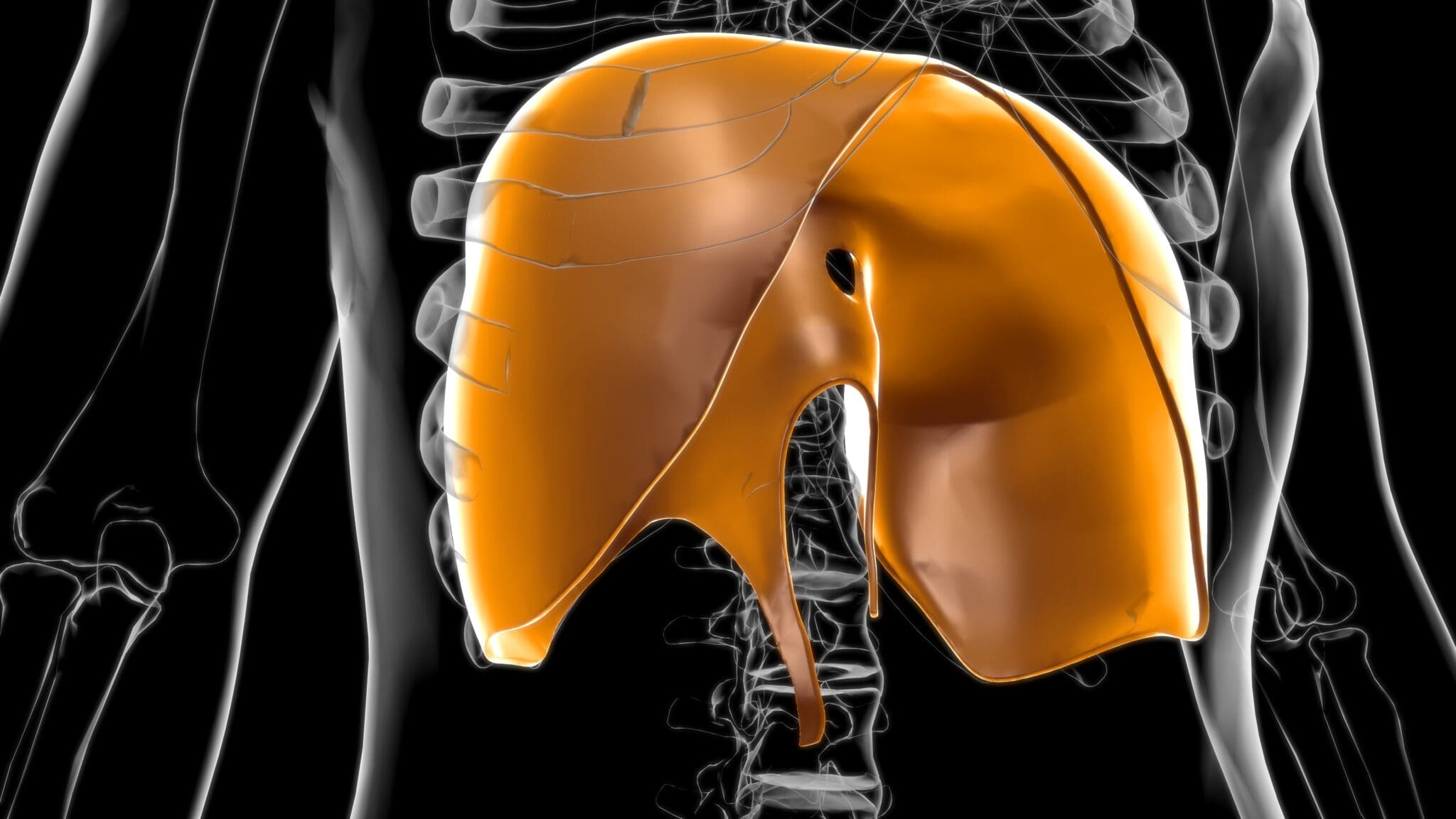
If you turn the diaphragm upside down, you can see all the things coming through it:
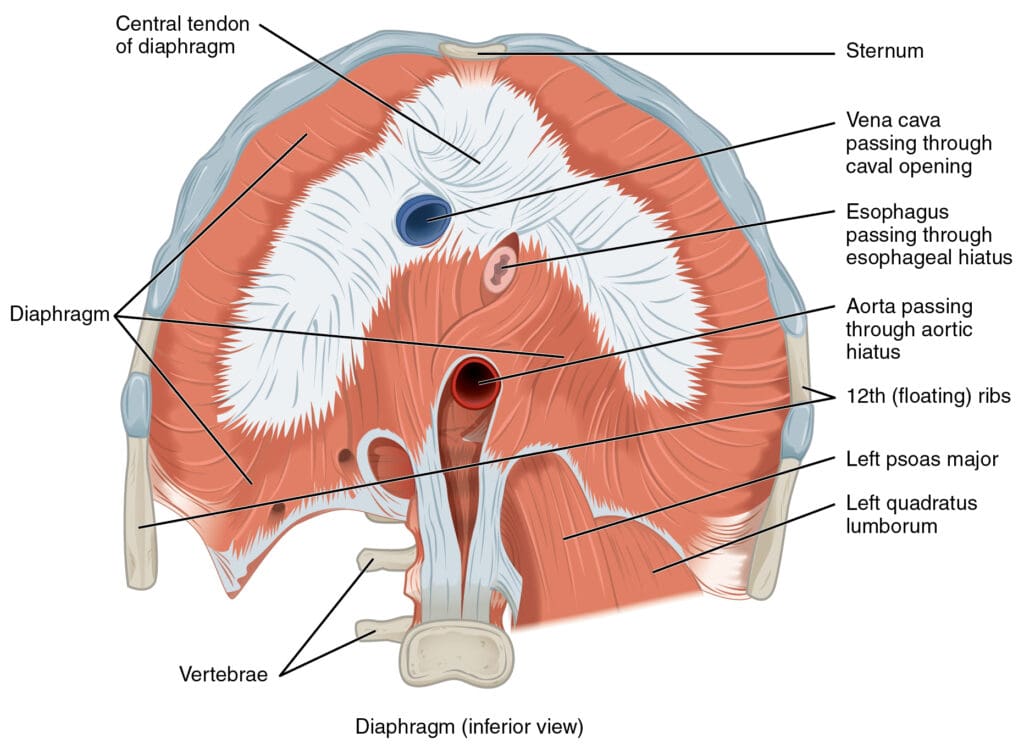
The vena cava, which supplies oxygen to the heart, the esophagus, the gateway to your stomach and the aorta play vital roles in health and wellness. A study has also shown immediate effects of chest wall mobility, posterior chain flexibility and lumbar range of motion (except flexion) immediately following myofascial release of the diaphragm. Another study demonstrated immediate improvements in shoulder ROM following diaphragm release.
The antagonists of this muscle are the transverse abdominus and internal oblique, two primary stabilizers of the spine. Remember, if one muscle is short and tight, its antagonist is long and weak. This means trigger points in the diaphragm may create instability of the spine.
Fascinating, isn’t it? We should all be checking our diaphragms for trigger points and releasing them and/or we should be assessing and treating the diaphragm in our low back and shoulder patients.
Conventional thinking says: The diaphragm helps us breathe.
Real World Thinking says: The diaphragm plays an integral role in breathing, flexibility of posterior chain (hamstrings, glutes, erector spinae, posterior deltoid) and lumbar spine. It may also affect acid reflux symptoms.
It only takes minute to assess and treat the diaphragm. Give it a try.
Because nobody has time to be in pain.
Until next time…

Kind Regards,
MoveWell Academy
[email protected]