Kinesiology THURSDAY – 8 Hardest Moves After 60 – Getting Up from the Floor
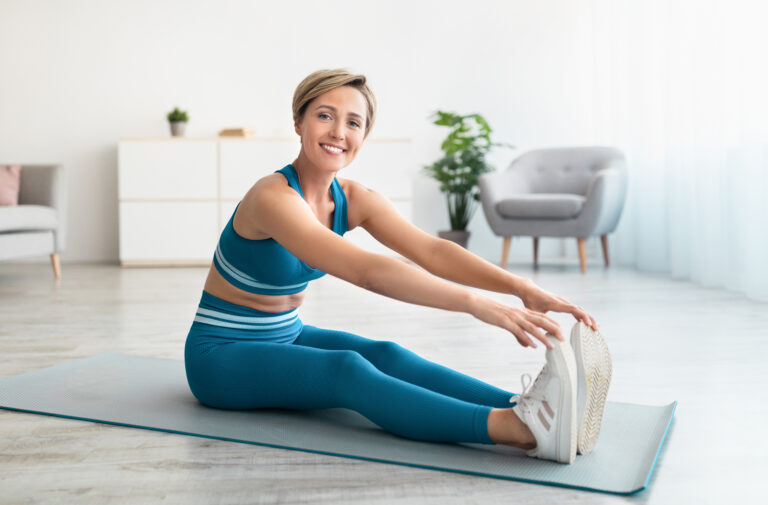
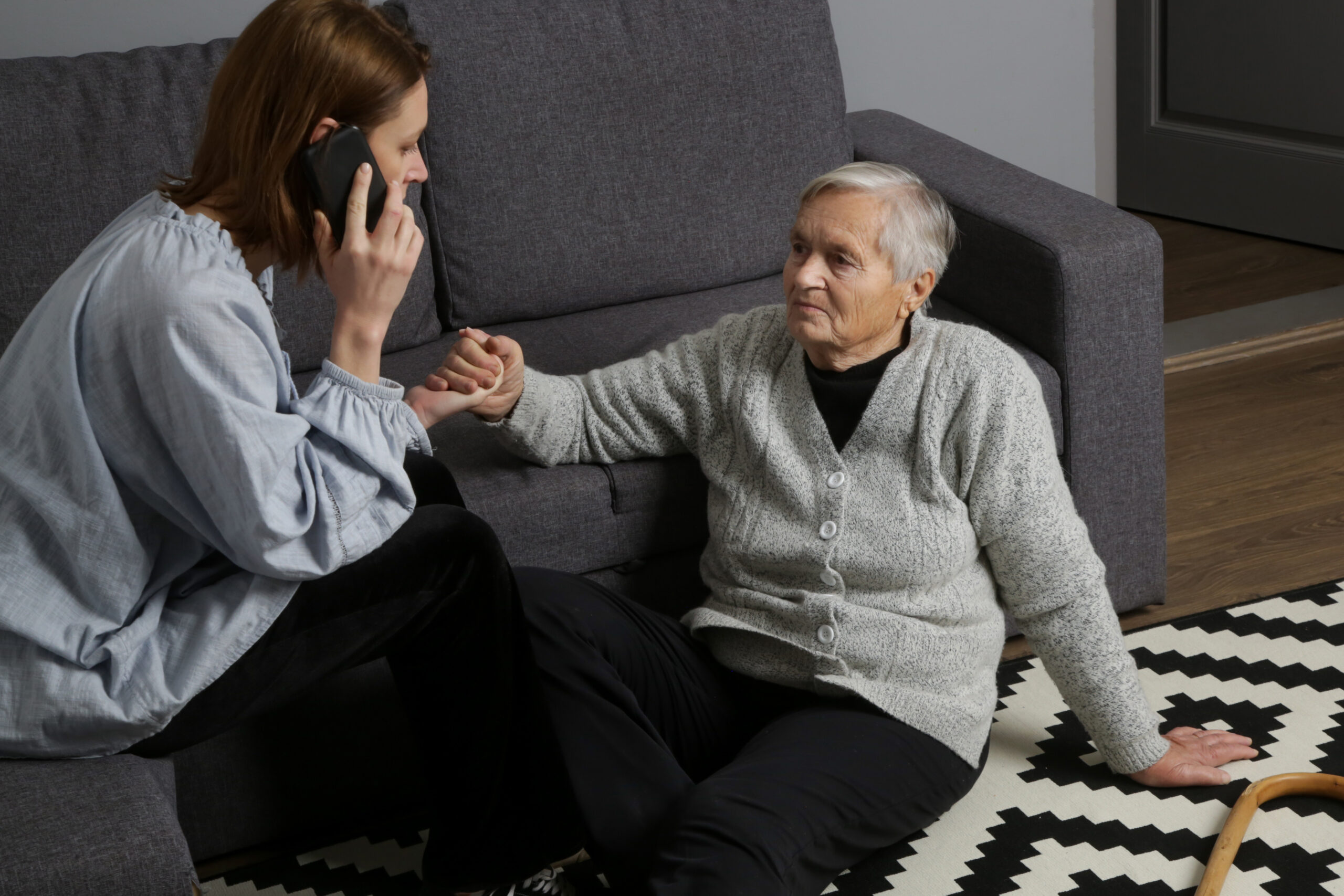
Does the picture above look inviting or impossible?
Most people never think about this until they need to. Yet the ability to get up from the floor may be one of the most important movements for maintaining independence as we age. It requires strength, balance, flexibility, coordination, and confidence all working together. In fact, many health professionals consider floor-to-stand ability a valuable indicator of overall physical function and resilience.
Unlike standing up from a chair, getting up from the floor places much greater demands on the body. It requires enough leg strength to lift your body weight, enough mobility to move through multiple positions, and enough balance to transition safely from the ground to standing. It also requires problem-solving and coordination as the body shifts from one position to another
Imagine that you accidentally trip while gardening, lose your balance while playing with your grandchildren, or simply find yourself sitting on the floor after reaching for something. Now ask yourself an important question: Could you get back up without assistance?
Kinesiology of Getting Up from the Floor
There are some key transitions that occur in getting up from the floor:
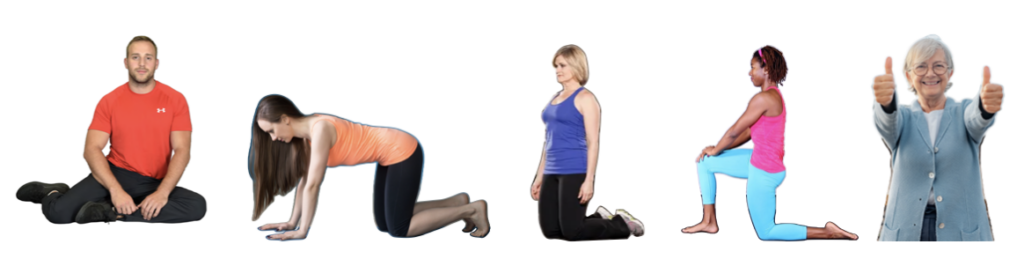
- Side-sitting to hands and knees (all fours)
- Hands and knees (all fours) to kneeling
- Kneeling to half kneeling
- Half-kneeling to standing (this is the hardest part)
Hands-On Techniques to Improve Getting Up from the Floor
The best manual techniques to improve the floor to standing transition include improving hip and ankle mobility:
- Trigger point release of piriformis, posterior gluteus medius, vastus lateralis and adductor (these help improve side-sitting)
- Trigger point release of wrist and finger flexors (this allows for greater wrist extension to get hands on the floor when on all fours)
- Trigger point release of psoas major (improves ability to tolerate kneeling and half-kneeling)
Real World Exercise
- Chair to floor half-kneeling – Sit on a chair and put one foot in front. Lower down to the floor in a half-kneeling position, then sit back up on the chair. You can place another chair in front of you to help push yourself back up onto the chair
- Kneeling to half-kneeling – Start in a kneeling position. Place one foot in front so that your knee is bent to 90 degrees. Return to the start and place the other foot in front.
- Staggered stance squat – Stand with one foot in front of the other with most of your weight on the front leg. Lower down into a squat, then stand back up. Practice going lower each time for six repetitions
- Half kneel to stand – Start in half kneeling. Place pressure down on both feet. Stand up.
- TRX rows – Hold onto some straps (suspension trainer). Walk your feet forwards. Lean back and then pull to perform a row. (This will help increase arm strength to help pull you up from the floor if needed).
Weekly Goal
A simple goal is to practice some form of floor mobility once or twice each week. This might be as simple as moving from sitting to kneeling and back again or practicing a supported floor-to-stand transition. Small, consistent practice can help preserve an ability that many people do not realize they are losing until it is gone.
Why does this matter?
The ability to get up from the floor is more than a physical task. It is a measure of independence, resilience, and confidence. Maintaining it means preserving the freedom to move through life on your own terms. There is a psychological benefit to maintaining floor mobility.
Confidence grows when you know you can manage yourself in a variety of situations. Many older adults describe feeling freer and more capable when they know they can safely get down to and back up from the floor. That confidence often carries over into other activities, encouraging them to stay active and engaged.
Next, we’ll conclude this series with perhaps the most important movement of all: the ability to catch yourself when you trip. Most falls do not happen because people lack strength. They happen because the body cannot react quickly enough to recover balance. Learning how to maintain that reaction may be one of the most valuable skills for healthy aging. I hope you join me.
Because nobody has time to be in pain.
Until next time…

Kind Regards,
MoveWell Academy
[email protected]