
Kinesiology THURSDAY – The Subtalar Joint Connection (Part 2)
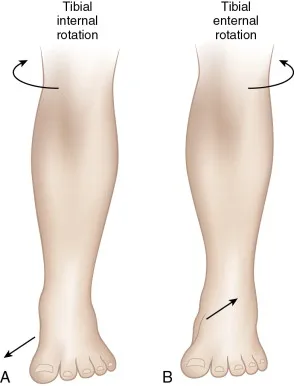
When the foot hits the ground, everything changes. This week, we will explore the effects of the subtalar joint on the tibia. Here is an article that describes the coupling effect of calcaneal eversion and adduction with talar and tibial internal rotation (just in case you wanted a more in-depth explanation). But here’s the real-world version:
- When your foot hits the ground, your calcaneus everts and adducts
- This causes tibial internal rotation
- Internal rotation of the tibia eccentrically loads the bicep femoris (lateral hamstring), soleus, tibialis posterior, flexor hallucis longus and flexor digitorum longus
- Internal rotation of the tibia moves the patella medially, initiating contact with the medial femoral condyle
Then as the calcaneus inverts and abducts, the processes above are reversed.
Why does this matter?
Ready for some “out-of-the-box” thinking? If your foot hits the ground and doesn’t evert (over supination) and tibial internal rotation does not occur, the following could happen:
- Chronic tightness of the bicep femoris which could lead to posterior/superior subluxation of the proximal fibula. This usually exhibits as a sharp pain in the lateral knee, often misdiagnosed as IT band friction syndrome. (Here’s a quick fix)
- Excessive strain on the IT band
- Chronic tightness of the soleus. Trigger points in the soleus can refer pain to the sacroiliac joint. Next time you see a patient with chronic SI joint pain, palpate for a trigger point in the soleus (just inferior to the gastrocnemius)
- The patella does not move medially. If the femur goes through its normal motion of internal rotation, excessive pressure on the lateral patellar facet may occur. This is one cause of patellofemoral pain (pain under your knee cap)
Try this test…
Stand with your feet hip width apart and toes pointed straight ahead. Roll your ankle in (do one at a time). You should notice your lower leg also rolling in a little. Are you able to do this equally on both sides? If not, you may lack subtalar joint eversion. Here is an excellent video demonstrating this move.
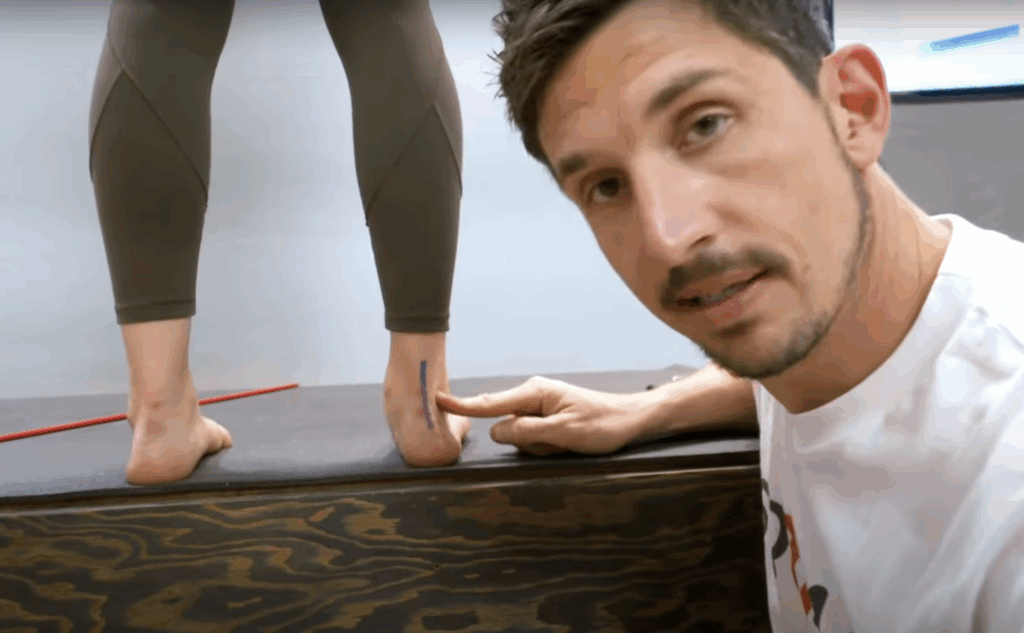
Remember, when the foot hits the ground, everything changes and a lack of tibial internal rotation could be the cause of knee and even lower back pain. So, do a little sup-pro dance.
Because nobody has time to be in pain.
Until next time…

Kind Regards,
MoveWell Academy
[email protected]