Muscle Minute TUESDAY – Meet the Supinator
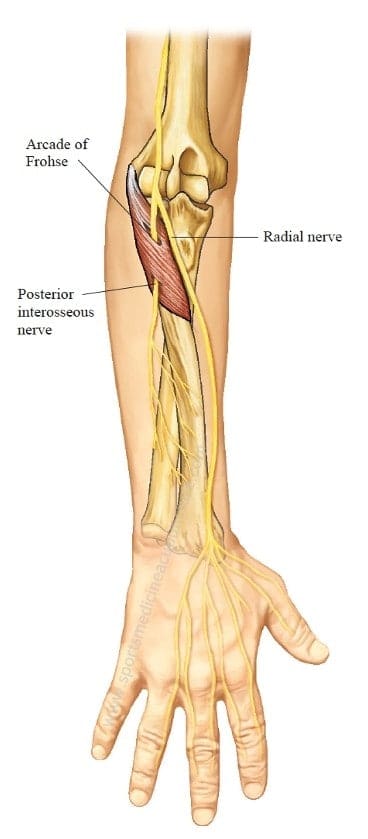
Image from Sports Medicine Acupuncture
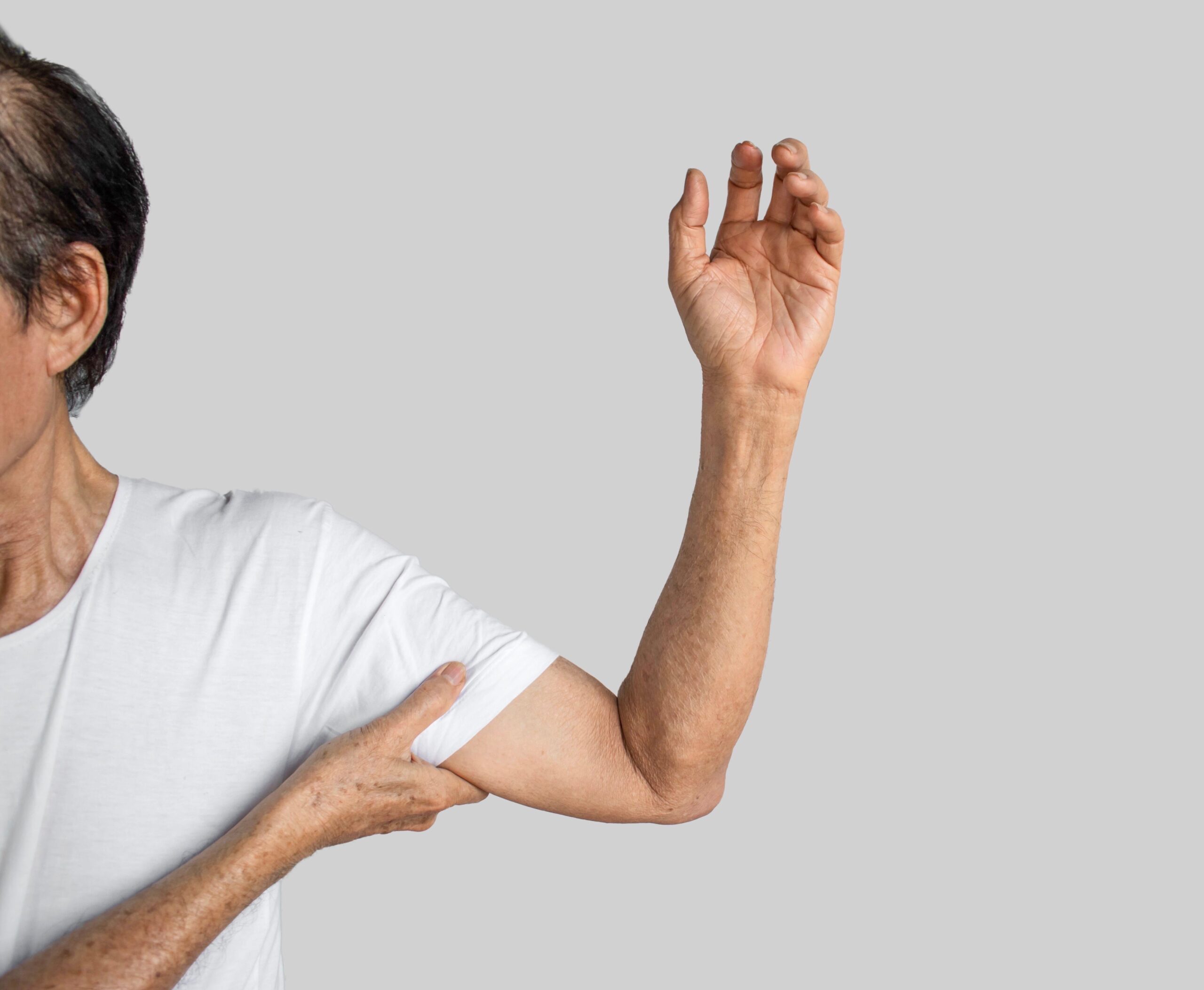
Tennis elbow doesn’t just happen to people who play tennis. And, in fact, sometimes tennis elbow isn’t that at all. Meet the supinator. A tennis elbow imposter that, if injured, creates lateral elbow pain that mimics the most common overuse injury of the elbow. How can we differentiate the two? Let’s dive in.
| Origin | lateral epicondyle of humerus, ulna, radial collateral ligament, annular ligament |
| Insertion | lateral proximal radial shaft |
| Action | supinates the forearm |
| Innervation | deep branch of radial n. (C5-T1) |
| Antagonists | pronator teres, pronator quadratus |
The Real World Supinator
Tennis elbow, or lateral epicondylitis, most often effects extensor carpi radialis brevis (ECRB). There is often pin-pointed pain at the lateral epicondyle, pain with resisted wrist extension and pain with passive stretch of wrist flexion with the elbow extended.
The supinator shares a common origin point with ECRB, but that is where the commonalities end. If the supinator is involved, there would be pain with resisted supination and passive stretch into pronation.
But the most interesting thing about this muscle is the nerve that pierces it, the posterior interosseus nerve (PIN) or deep branch of the radial nerve. It enters the supinator through the Arcade of Frohse and innervates the extensors of the wrist, fingers and thumb. Compression of the PIN may cause radiating pain into the middle of the forearm and anatomical snuffbox region (proximal thumb), as well as rapid fatigue of the wrist and finger extensors.
Why does this matter?
- Supinator syndrome may mimic lateral epicondylitis involving ECRB.
- Supinator is functionally synergistic with the opposite side gluteus maximus. If the opposite gluteus maximus is weak, then the supinator will be overused with pulling activities.
- Supinator syndrome may mimic C5, C6 nerve root compression. If you are treating the cervical spine for radiating pain into the thumb and forearm region and you aren’t getting the results you want, check out the supinator.
- In nursemaid’s elbow, the supinator may be impinged with the radial collateral ligament. This seems random to mention since we have been talking about tennis elbow, but picking up a young child by yanking on their arm could involve this muscle.
Conventional thinking says: The supinator just supinates the forearm.
Real World Thinking says: The more important thing to consider about the supinator is the nerve that runs through it. Releasing fascia of the supinator may alleviate compression of the PIN and alleviate pain in the forearm and hand. And don’t forget to check the strength of the opposite side butt cheek.
Because nobody has time to be in pain.
Until next time…

Kind Regards,
MoveWell Academy
[email protected]