
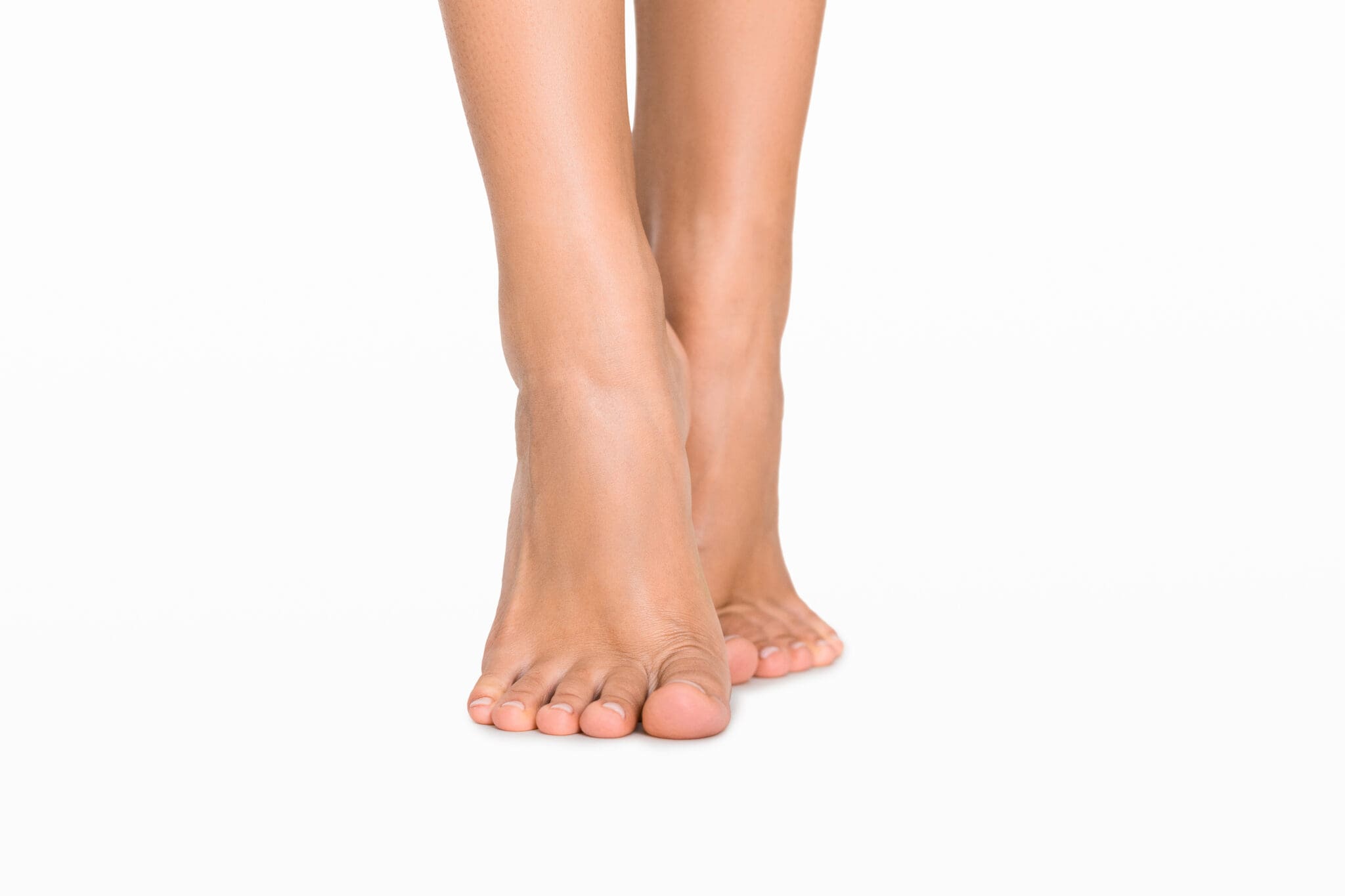
Muscle Minute TUESDAY – The Flexor Hallucis Longus
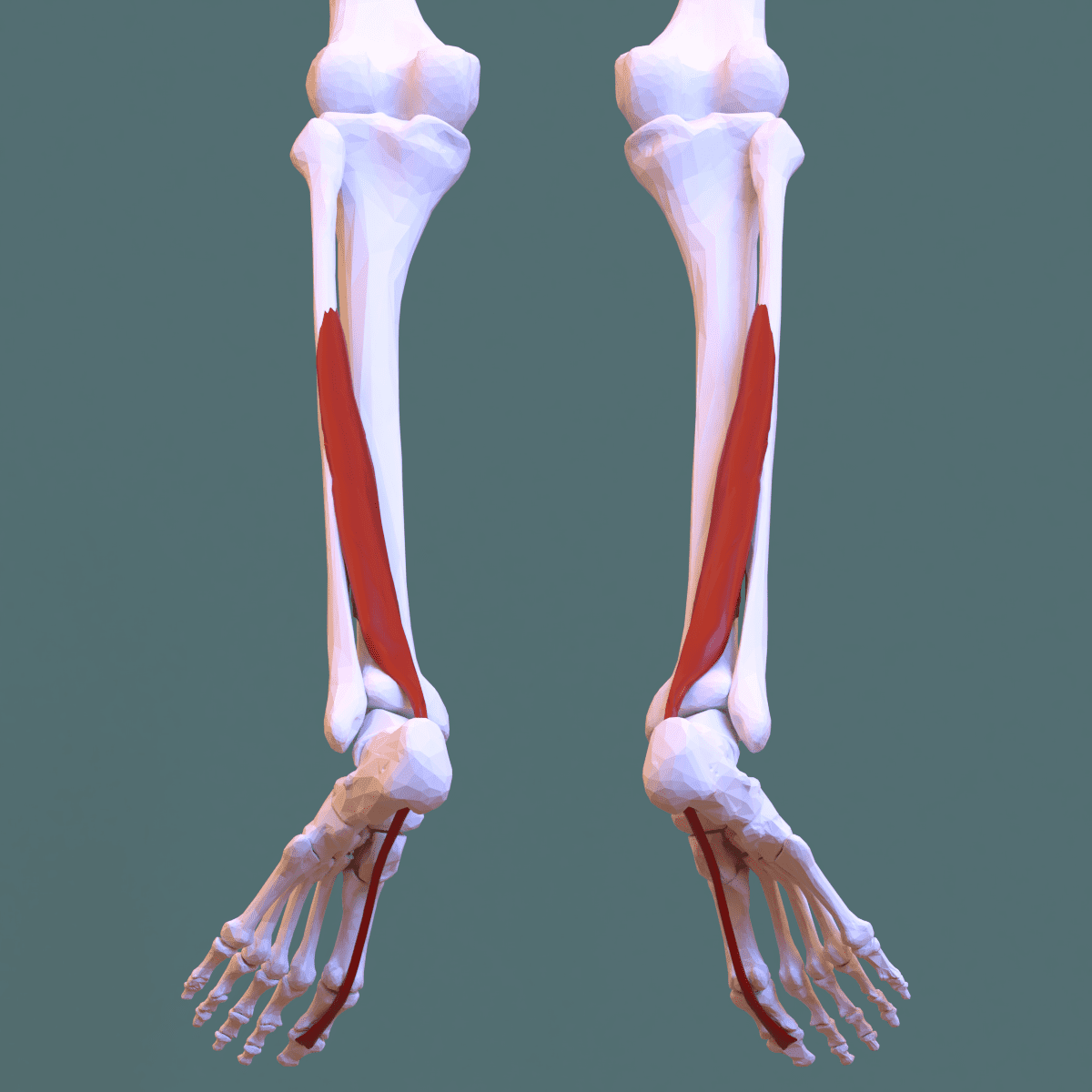
The flexor hallucis longus (FHL) is a tiny but pivotal muscle. Literally. Though its role in most anatomy books is to flex the toe, it’s main job in the real world is to decelerate great toe extension as your weight shifts to your big toe in late stance. Let’s take a deeper dive.
| Origin | middle 1/3 of fibula (posterior aspect) |
| Insertion | plantar surface of distal surface of hallux (great toe) |
| Action | great toe flexion, plantarflexion of ankle |
| Innervation | tibial n. (S2, S3) |
| Antagonists | extensor hallucis longus, tibialis anterior |
The Real World Flexor Hallucis Longus (FHL)
Cadaveric studies have shown its attachment point to be more lateral on the distal phalynx, implicating it in the cause of hallux valgus (bunions). It is interesting to note that it begins on the lateral lower leg and then wraps around to the medial side of the foot. If you look at the picture above, you can see how a posteriorly displaced fibula may create tightness in this muscle. You can also see how a toe-out posture may place it in a long/weak position.
Here is why this matters:
- Great toe extension occurs when you push off your big toe in late stance. If your foot is be pointed straight ahead at this point, toe extension with every step stretches the FHL.
- When you toe out, the FHL does NOT get stretched with every step, causing it to shorten over time. Due to its lateral attachment of the distal hallux, it begins to place a valgus force on the first MTP joint.
- Bone is laid down along lines of stress (Wolf’s Law). With repeated valgus force on the medial ligaments, the body lays down more bone, causing hallux valgus (bunion)
- It’s also interesting to note the attachment of this muscle on the fibula. If you look at the picture above, you can see how a posteriorly displaced fibula could create a shortening of this muscle from above. (Hint: a tight lateral hamstring could create a posteriorly displaced fibula).
Conventional thinking says: FHL just flexes the toe
Real World Thinking says: In order for FHL to maintain normal length, the toes should be pointed straight ahead when you walk and the fibula should be in a proper position. Lack of ankle dorsiflexion (causing toe-out) is usually an over pronation issue. A posteriorly displaced fibular head is usually an over supination issue. Consider all options.
Because nobody has time to be in pain.
Until next time…

Kind Regards,
MoveWell Academy
[email protected]